Learn about Syria's story and discover how it became a land of civilization and diversity... a country that combines authenticity and antiquity spanning thousands of years with the ambition to build a modern future.
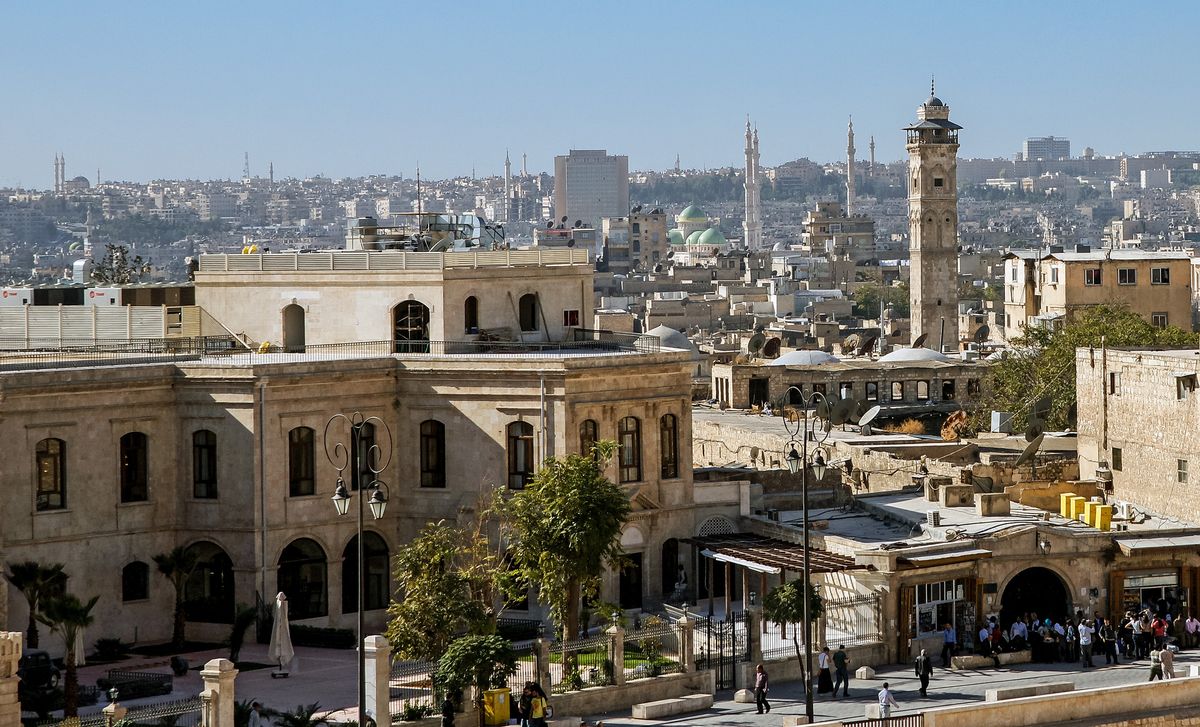
Throughout history, Syria has been the cradle of the oldest human civilizations and a center for commercial and cultural exchange between East and West. Today, it still maintains its position as one of the richest countries in heritage and diversity. Syria includes ancient cities such as Damascus, the oldest inhabited capital in the world, and Aleppo, which was known as the heart of trade for long centuries. Syria is distinguished by its great monuments such as Palmyra and Aleppo Citadel, and by its diverse nature from coast to mountains to desert. It is also a country of hospitality and generosity, where visitors gather around the flavors of Syrian cuisine and unforgettable experiences in its old markets and historic neighborhoods.
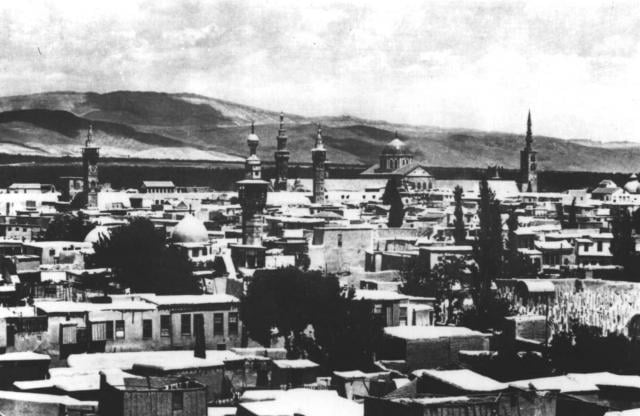
Damascus became the capital of the Umayyad state, the first Arab Islamic empire, and witnessed the construction of the Umayyad Mosque and the development of architecture and arts.
Choose a year to discover Syria's story and its timeline
Syria is considered the heart of civilizations and the crossroads throughout thousands of years. Before the discovery of modern trade routes, the country was a main station on the Silk Road, where cities like Damascus, Aleppo and Palmyra were known as thriving centers for commercial and cultural exchange.
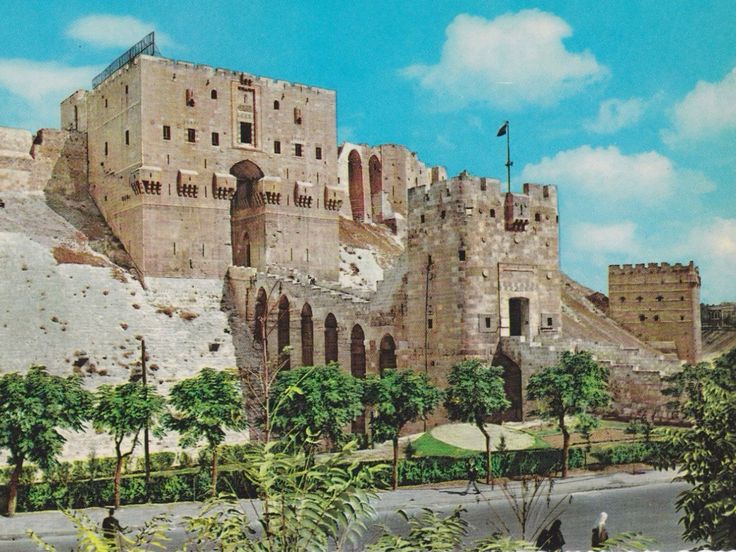
Archaeological discoveries have shown human presence in Syria for hundreds of thousands of years. Damascus is the oldest inhabited capital in the world, while Palmyra in the middle of the Syrian desert was once a thriving city competing with Rome in its beauty and trade. The Great Umayyad Mosque in Damascus and Aleppo Citadel are also considered among the most important historical landmarks in the Middle East.
Syria includes ancient palaces and markets such as Al-Adhimiyya School and Khan Asaad Pasha in Old Damascus, and Aleppo's historic markets that UNESCO has listed as World Heritage.
Syria hosted many cultural and artistic festivals such as Palmyra Festival and Bosra Festival, which brought together musicians and artists from all over the world.
From the beaches of Latakia and Tartous, to the green coastal mountains, to the Palmyra steppe and Deir ez-Zor desert, Syria is rich in its natural diversity. It is also distinguished by Ain al-Fijah spring that has watered Damascus for centuries.
Syria hosts ancient universities such as the University of Damascus (1923), which is considered one of the oldest universities in the region. It was also known for its traditional crafts such as Aleppo soap making and Damascene textile (brocade), whose fame reached Europe and the world. Syria achieved a prominent presence in history, and is still a land rich in heritage, combining ancient past with ambition for a renewed future. It is truly a land where civilization never dies.
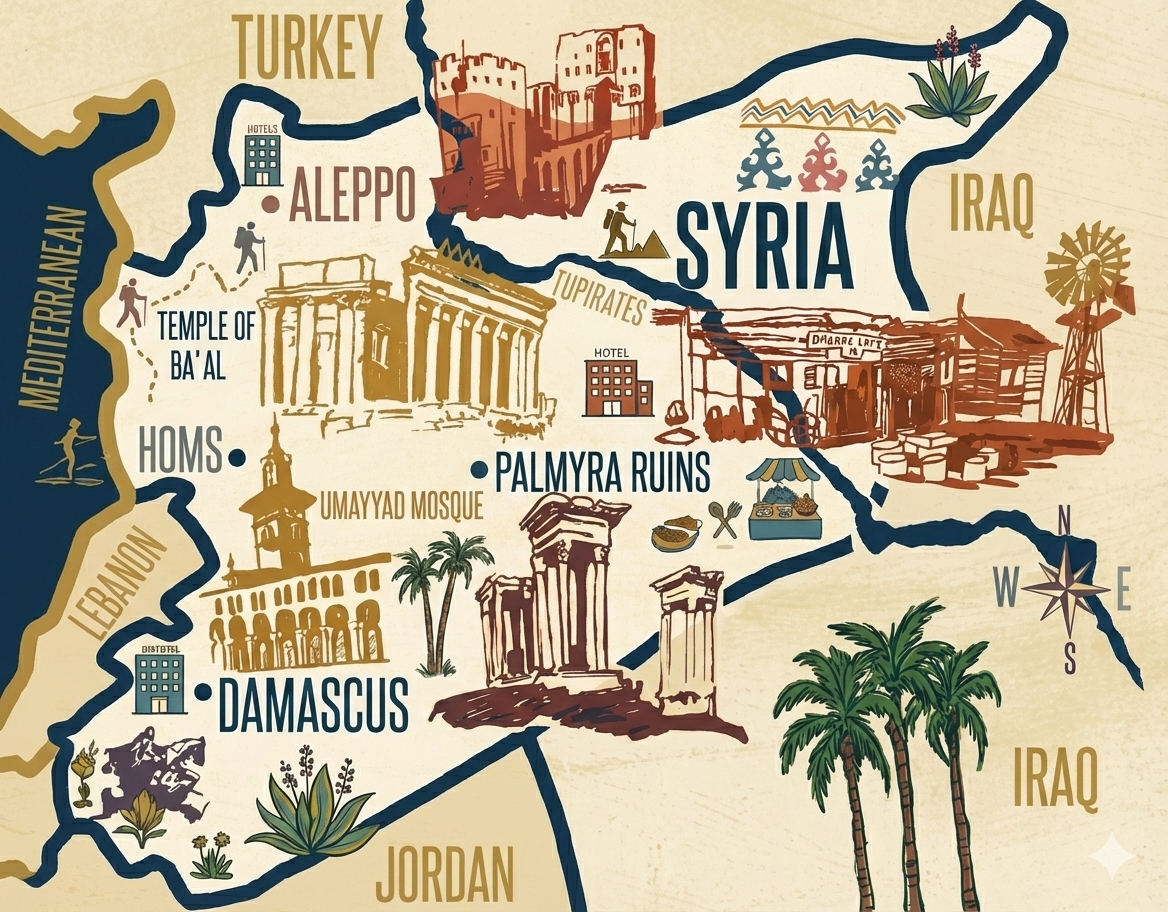
Syria is one of the Arab countries located in the heart of the Middle East region, sharing borders with Lebanon and Palestine to the west, Jordan to the south, Iraq to the east, and Turkey to the north, and extends along the Mediterranean coast to the west. Syria's strategic location gives it great importance throughout history, as it has always been a bridge connecting Asia, Europe and Africa, and the most important trade routes such as the Silk Road passed through it. This location made it a center for commercial, cultural and civilizational exchange for thousands of years, and a destination for visitors seeking history, nature and diversity.
The current flag was adopted in 2024 after the success of the Syrian revolution, and consists of three horizontal stripes: green, white, and black, with three red stars in the center.
Syria is one of the oldest inhabited civilizations in the world, with archaeological sites dating back to prehistoric times and multiple civilizational stages such as Elara and Akkad, with a continuous history linking the ancient Middle East to the world.
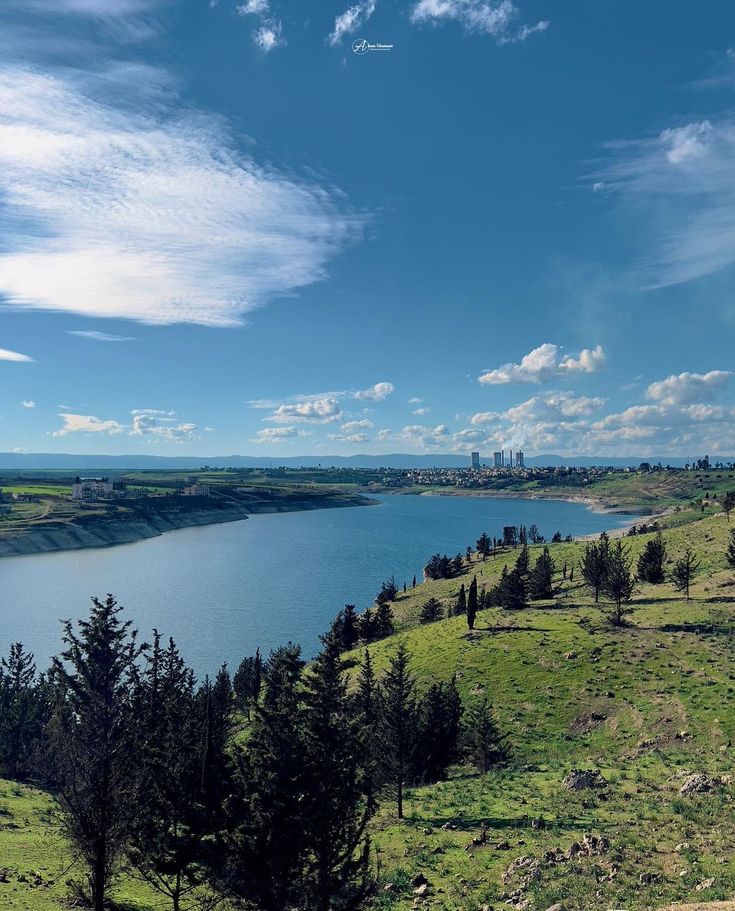
Syria is located in the heart of the Middle East, bordered by Turkey to the north, Iraq to the east, Jordan to the south, Lebanon and Palestine to the west. This strategic location makes it a crossroads between Asia, Europe and Africa.
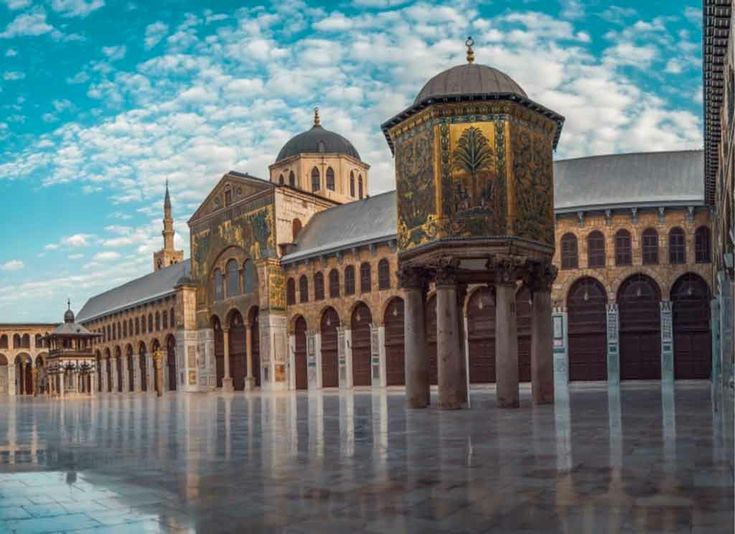
Old Damascus, Aleppo city, and Palmyra are among the most prominent Syrian historical cities, hosting sites listed as UNESCO World Heritage.
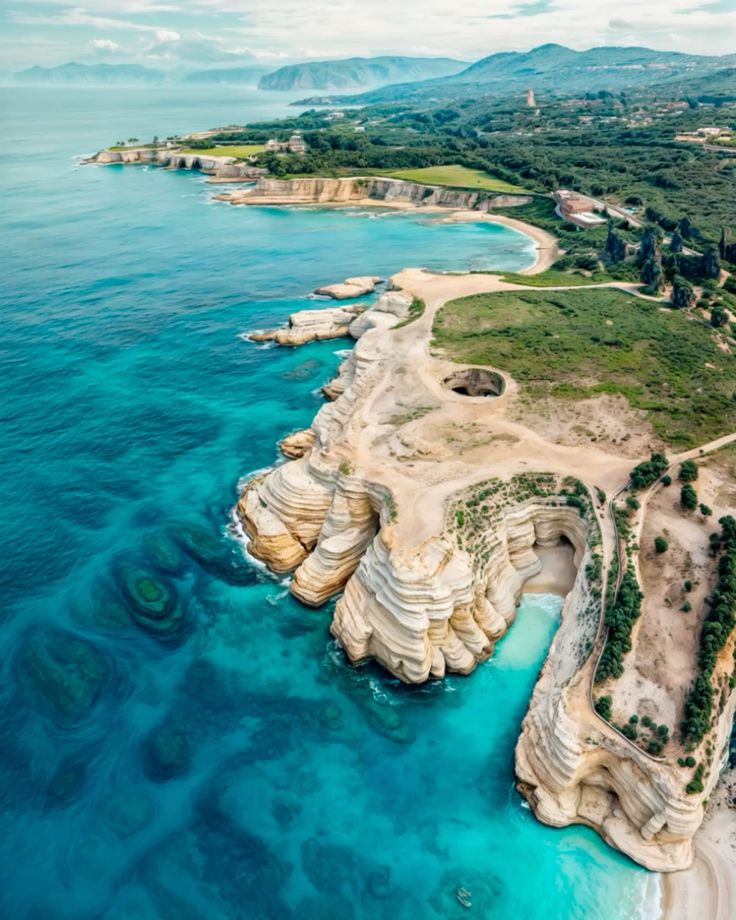
The Syrian coast includes the cities of Latakia and Tartous, characterized by sandy and rocky beaches and the warm waters of the Mediterranean Sea, making it a distinctive destination for relaxation and swimming. Tourists can practice water sports such as diving, boating, water skiing, and sea fishing, with short boat trips available along the coast.
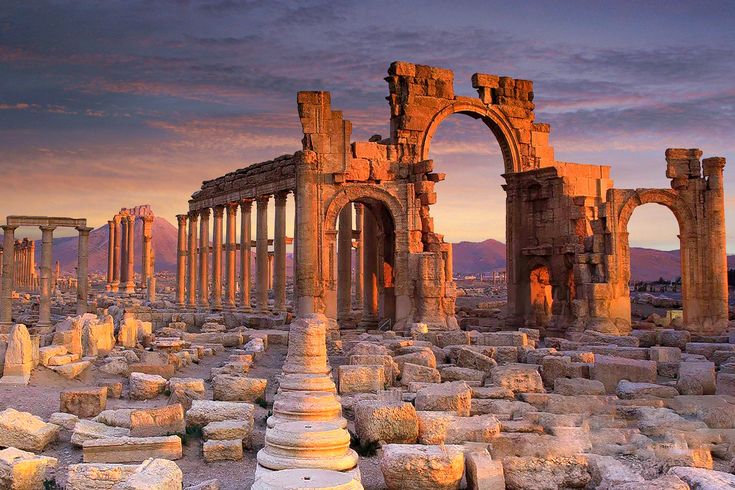
Palmyra (the city of Roman hills), Old Damascus, Old Aleppo, Krak des Chevaliers, and Toda Desert (extended historical value), all part of the Syrian cultural heritage listed on the UNESCO list.
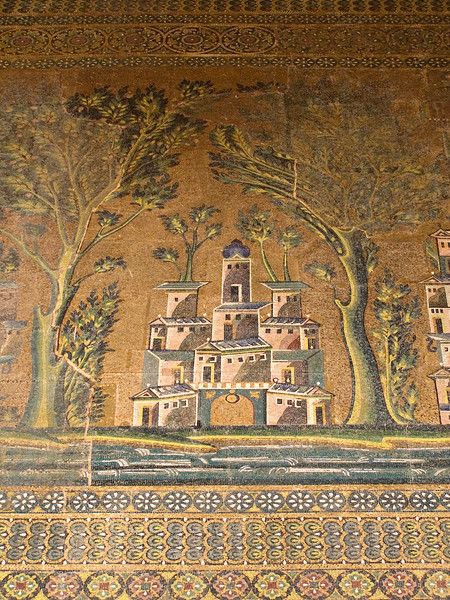
Syria is rich in culture and arts: traditional music, classical Arabic literature, diverse Syrian cuisine, Islamic architecture, and contemporary arts. These branches intertwine with history and national identity.

In Syria, multiple languages are used in daily life and institutions, varying between Syrian Standard Arabic and local dialects, in addition to linguistic influences from Turkish and English in the modern context and global communication.
Loading weather information...